
Introduction
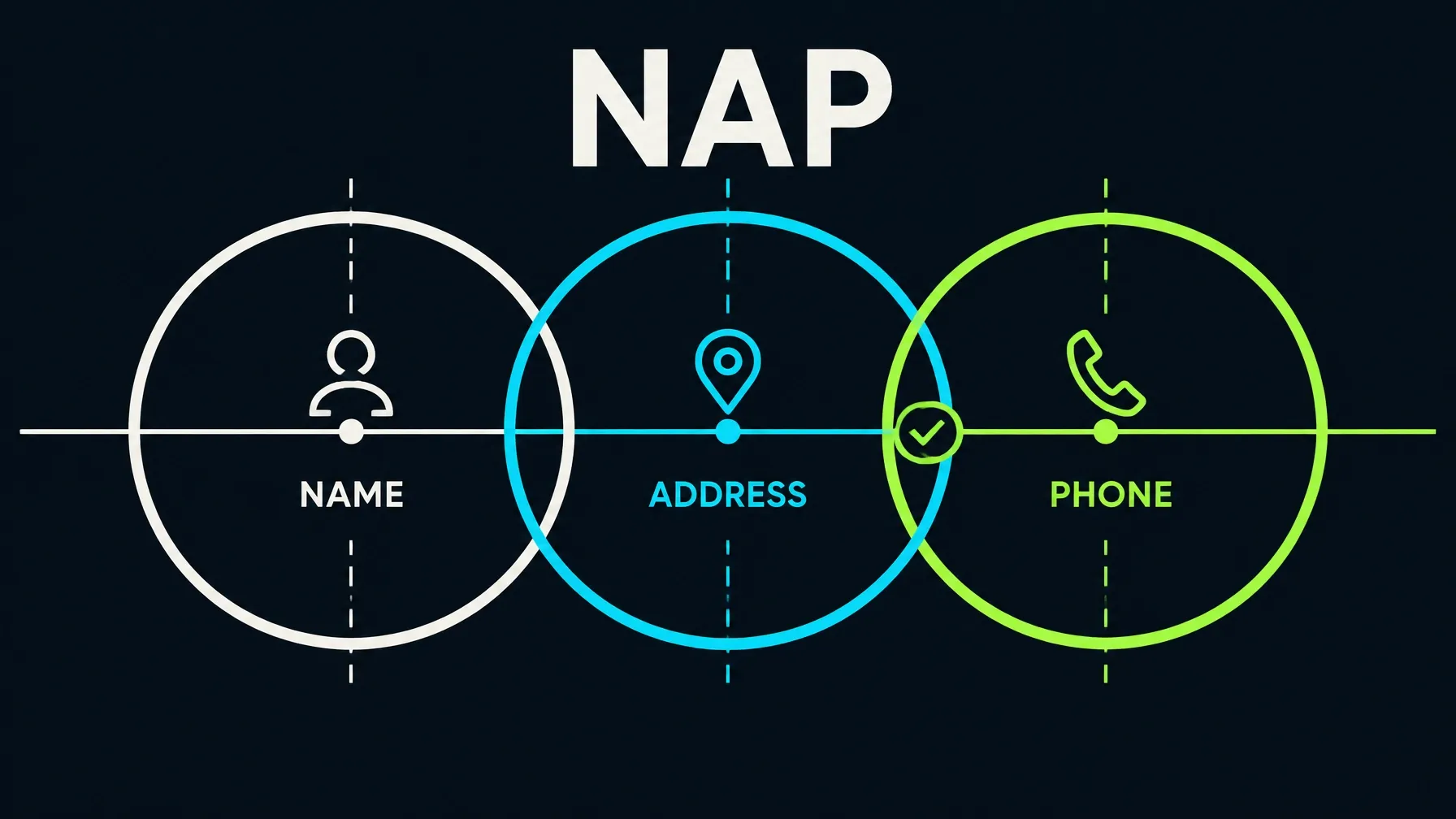
NAP stands for name, address and phone number. Consistent NAP information helps people and search systems connect listings, pages and contact details to one real business entity.
01
What NAP consistency means
A citation is a public reference to a business. NAP consistency means the core identity details are accurate and represented consistently enough that a person can tell the references describe the same organization.
The goal is not to force every platform into identical punctuation. The important questions are whether the business name, real location or service-area description, phone number and website agree and whether the listing is maintained.
02
Why NAP matters for local search and entity clarity
Local search depends on more than a keyword on a page. Search systems need to understand which organization provides the service, where it is based and which areas it serves.
Consistent public information reduces ambiguity for customers comparing listings and supports the broader entity story built by the website, Business Profile, directory references and branded mentions. It is a trust and clarity issue before it is a formatting exercise.
03
The sources that matter most
Start with the Google Business Profile because it is a primary local discovery surface for many businesses. Then review the Apple Business Connect and Bing Places listings when those platforms matter to the audience.
Industry directories, chambers, trade associations, licensing references and reputable local organizations can also support the public understanding of the business. The best sources are accurate, relevant and maintained—not simply numerous.
04
How inconsistency shows up
Common problems include an old phone number, a former address, several versions of the business name, a duplicate profile, an outdated service-area description or a website that disagrees with the listings.
Inconsistency can also appear in the way the site describes the organization. A page that suggests several offices while the business has one real base creates a different kind of entity confusion.
05
How to audit NAP citations
Create a source-of-truth record with the approved business name, phone, address, official URL, hours and service-area language. Check the most important profiles and directories against it.
Record the listing URL, owner access, last review date, problem found and action taken. Remove or correct duplicates where the platform allows it, and do not create new listings simply to increase the count.
A practical audit order
- Confirm the website contact page, footer and Organization schema agree.
- Review Google Business Profile, Apple Business Connect and Bing Places.
- Check relevant industry, chamber and licensing references.
- Search the old phone number, former name and old address for lingering references.
- Document corrections and recheck the sources after updates are live.
06
How the website reinforces the same entity
The website should use the approved name and phone consistently in visible contact areas. The contact page should explain the real location or service-area model, and service pages should describe coverage without implying offices that do not exist.
Organization and BreadcrumbList schema should match the visible page content. Internal links should connect the home market, services, proof and relevant local resources so the relationship is understandable to visitors and crawlers.
07
Keep NAP work connected to local SEO
NAP cleanup is one part of a local SEO system. It works alongside useful service pages, a maintained Business Profile, accurate reviews, technical access and content that answers local customer questions.
If the business details, service area or local page architecture need a second look, the Local SEO service is the right next step.